
Picture Windows
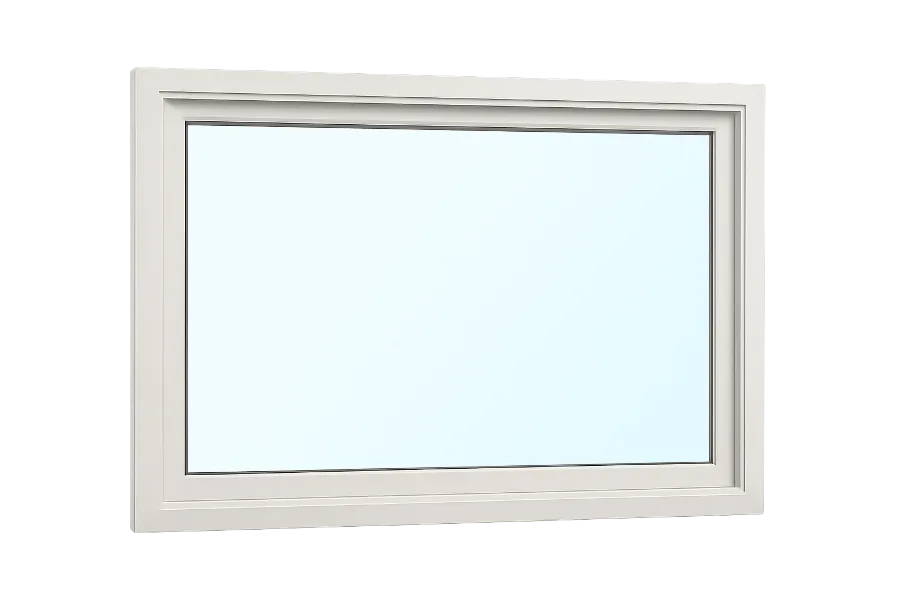
Picture windows are fixed (they don’t open) and maximize glass area for views and daylight. They’re often paired with operable windows on either side for ventilation.
Get a free quote from a vetted local window pro
One local expert, one call, one free in-home assessment — your info is never sold to a list of contractors.
- Free in-home assessment
- One vetted local pro
- No pressure, no spam
Best for
- ✓Scenic views
- ✓Maximizing daylight
- ✓Pairing with casements or double-hungs
Why forever-home owners like them
- ✓No operation needed — nothing to lift or crank
- ✓Excellent for passive solar light
- ✓Large, clear views of the yard or street
Things to consider
- •Provide no ventilation on their own
- •Large units need proper structural support
Picture Windows in Lehigh Valley homes: what to know
A picture window has one job: hold a big sheet of glass still, keep the weather on the other side of it, and get out of the way of the view. In the Poconos that view is usually water, and the lake houses and A-frames around the region were built with as much fixed glass toward it as the framing would allow. Down in the valley the fixed window is more often the center of a living-room front, or the single wide pane a 1970s builder put in a family room to make it feel larger. Homeowners looking into picture window replacement Lehigh Valley wide tend to arrive with one of three complaints: the glass has fogged between the panes, the room is unbearable on a summer afternoon, or the frame around the glass has started to move. All three are solved by the same conversation about glass, frame, and how the unit is set.
Older city housing has its own version. The doubles of Scranton’s Hill Section and the twins and doubles of Wilkes-Barre often carry a parlor picture window: a wide single lite set between two narrow double-hungs, sometimes with a leaded transom running across all three. Many of those center lites are still single-pane, protected by a storm panel that has not been taken down in years. Replacing that center unit is straightforward, but the flanking double-hungs and the transom usually belong in the same order so the whole assembly seals as one piece instead of three.
Two things about the local climate deserve attention on a window that cannot open. The first is orientation. West-facing fixed glass takes the full afternoon in July, and a room behind it heats up faster than a room with sashes you can crack in the evening; the glass coating has to do the work the ventilation cannot. The second is low winter sun. In December the sun sits so low that a south- or west-facing picture window throws light deep into the room and onto the floor, which is a pleasure for the people and a hazard for hardwood and upholstery. A coating chosen with both seasons in mind handles the trade-off.
Where picture windows work best
Lake-facing walls in the Poconos
A cottage on a Pocono lake lives or dies by the wall that faces the water. Fixed glass there gives the widest uninterrupted view, and because the room-side frame is slim there is less of it to block the sightline from a couch or a dining table set back from the window.
A-frame gables and odd shapes
The triangle under an A-frame ridge and the tall panels beside it are almost always fixed units, since nothing that shape opens well. Each is measured and built to the opening, and a replacement is the chance to swap decades-old single glass for an insulated unit in the same outline.
Parlor fronts in Scranton and Wilkes-Barre
The Hill Section and the older Wilkes-Barre neighborhoods are full of doubles whose front room was designed around a wide center lite. A new fixed unit in that spot keeps the street face familiar and lets the household finally retire the storm panel.
Stair landings and two-story foyers
A tall fixed unit over a landing lights the stair without anyone needing to reach it. Because nobody will ever open it, the only decisions are the glass coating for the exposure and whether the frame color should match the trim or disappear into the wall.
Living-room centers with operable flankers
The Lehigh Valley colonial living room often has a wide center pane with a double-hung or casement on each side. Replacing the center as fixed glass and the sides as operable units keeps the view clear in the middle and puts the ventilation where hands can reach it.
Get a free quote from a vetted local window pro
One local expert, one call, one free in-home assessment — your info is never sold to a list of contractors.
- Free in-home assessment
- One vetted local pro
- No pressure, no spam
Glass, hardware, and operation
On a fixed window there is no hardware to speak of, so the glass carries the entire conversation. Start with the coating. A Low-E coating that leans toward solar control makes sense on west and southwest exposures where summer heat gain is the problem; a coating that lets more warmth through suits a north or east wall where you would rather keep the winter warmth the sun offers. Ask your matched installer to name the coating on each opening rather than writing one package for the house. A warm-edge spacer matters more on a large pane than a small one because the perimeter is where frost forms on a cold morning, and a long perimeter means a long line of it.
Size and location decide the rest. Any pane close to the floor, beside a door, or large enough that a person could fall into it should be tempered glass, and the installer should say so on the order. Very large single panes may be specified thicker or as laminated glass to handle wind, which is a real consideration on an open lake shore or a ridge-top lot exposed to South Mountain. Triple-pane is easiest to fit in a fixed unit because there is no sash to carry the extra weight; it is a reasonable ask on a lake wall or any north-facing pane you sit next to in winter.
The frame is the closest thing to hardware. A slim fixed frame maximizes glass, but the frame material still has to stay dimensionally stable through freeze-thaw so the glazing seal is not worked back and forth every season. Fiberglass and composite frames hold large lites with little movement; well-made vinyl does the job at moderate sizes. Interior finish, grille pattern, and exterior color are decided the same way as any other window, with one exception: on a view window, most people skip grilles entirely.
How the installation goes
Whether a picture window goes in as an insert or a full-frame replacement depends on how the original was built. Factory-made fixed units from the 1980s onward usually have a real frame that a new insert can sit inside if it is square and dry. Older fixed glass in lake cottages, A-frames, and city parlors was often site-glazed, meaning the pane was set straight into wood stops on the framing with no separate frame at all, and those openings need a full-frame unit with new flashing. The local pro we connect you with will check the sill for softness, look at the stops and the wall below for water stains, measure the opening at several points, and confirm that the header above is carrying the load without sagging, since a bowed header will bind a large fixed unit and stress the glass.
On the day, a large fixed unit is handled by at least two people and sometimes needs suction cups and a ladder crew outside, so clear a path from the driveway to the opening and move anything fragile off the wall. The old glass comes out first, usually cut free of its stops or its frame, and the opening is inspected and repaired before the new unit is set, shimmed plumb and level, and fastened through the frame. Low-expansion foam fills the gap around the perimeter, the exterior is flashed and sealed, and the interior trim goes back on. A single large picture window is often a half-day job; a full lake wall of fixed units with a deck on the outside can run longer and may need staging on the deck side.
When something else fits better
Casement Windows
You want most of the view but also want to open the room up on a spring evening. A casement swings its whole sash clear and, when closed, seals nearly as tightly as fixed glass.
Awning Windows
The picture window is staying but the room needs air. An awning unit set below or beside the fixed pane vents in light rain and leaves the main view untouched.
Bay & Bow Windows
You want the light and a place to sit in it. A bay or bow projects the glass outward and adds a seat, in exchange for a more involved installation.
Before the visit: a picture checklist
- Note which direction the window faces and at what time of day the room gets uncomfortable, if it does.
- Look closely at the glass for haze or a milky film between the panes, which means the seal has failed.
- Check the wall and floor directly below the window for staining, soft drywall, or a sill that gives under a thumb.
- Decide whether the room has enough ventilation without this window or whether a venting unit should join it.
- Photograph the outside of the opening, including any deck, grade, or landscaping that would affect access.
- Ask whether the pane will be tempered, and whether its size calls for thicker or laminated glass.
Picture questions
Should every room have an operable window?
Building codes and comfort usually want operable openings for egress and airflow in bedrooms. Picture windows work well in living areas alongside operable units.
Is a fixed window warmer than one that opens?
High-performance Low-E glass and proper installation matter more than whether a window opens. Ask about the glass package.
Will a west-facing picture window make the room hotter in summer?
It can, and older clear glass certainly does. The fix is a Low-E coating chosen for solar control on that exposure, which reflects much of the afternoon heat while still passing daylight. Pairing the fixed pane with a venting window nearby lets the room dump heat in the evening. Exterior shade from a tree or an overhang helps as well.
Can one fixed pane replace the two double-hungs in our parlor?
Often, yes. The two openings are combined into one by removing the framing between them and setting a new header sized for the wider span, then the fixed unit goes in as a full-frame install. The result is a cleaner view and one less seam to leak. Keep in mind that a room with no other operable window loses its ventilation, so many owners keep one double-hung and widen the other.
Is a picture window with flankers one unit or three?
Either, depending on how it is ordered. Factory-mulled assemblies join the fixed center and its two operable sides into one frame that installs as a piece, which gives the tightest joint between them. Separate units set side by side with a site-built mull post are used when the opening is too large to ship as one. Ask which approach your matched installer is planning and why.
How do we clean the outside of a fixed window on a second story?
From outside, with a pole and a squeegee, or by a window-cleaning service once or twice a year. Fixed glass cannot tilt in, which is the one practical drawback of the style. Some homeowners put the fixed unit where a pole reaches from the ground and use tilt-in double-hungs where it does not.
Does the low winter sun through a big fixed window fade floors and furniture?
Over years, yes, especially through older clear glass. Low-E coatings cut a good share of the ultraviolet light that does the fading, and laminated glass cuts more. When you talk through picture window replacement Lehigh Valley installers should be able to tell you what each coating on their list does for fading as well as for heat, so ask directly.
How long does a made-to-order fixed unit take to arrive?
Longer than a stock-size double-hung. Standard rectangles in common sizes may be on hand, but a lake-wall panel, a trapezoid, or anything oversized is built to the measurements from the visit and shipped when it is ready. The local pro we connect you with will give you the manufacturer’s current timing when the order is placed so you can plan around it.
Other window styles
Compare frame materials
Getting picture installed near you
We match homeowners across the Lehigh Valley and Poconos with one vetted local installer.
Get a free quote from a vetted local window pro
One local expert, one call, one free in-home assessment — your info is never sold to a list of contractors.
- Free in-home assessment
- One vetted local pro
- No pressure, no spam