
Bay & Bow Windows
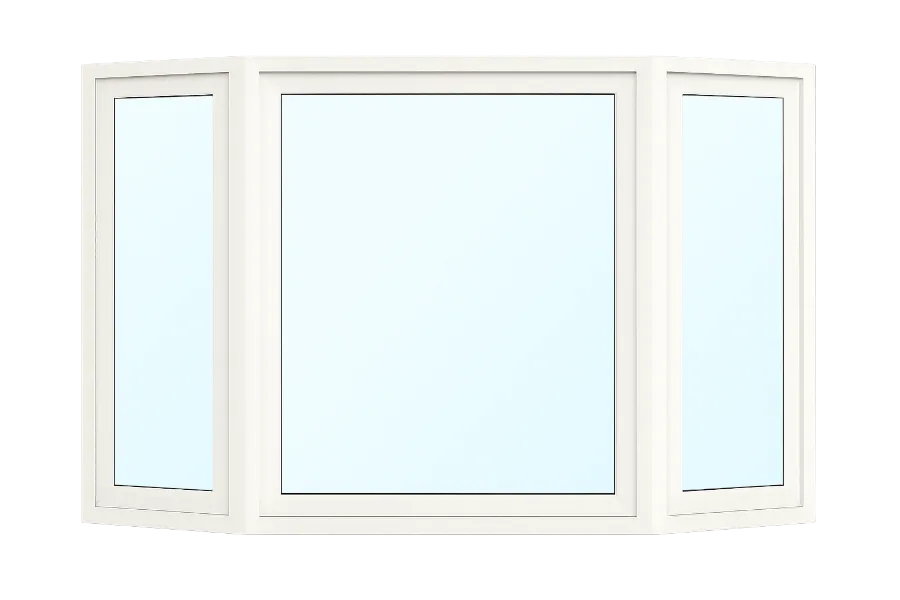
Bay and bow windows project outward from the home, adding light, space, and architectural character. They’re a favorite feature window in living rooms and dining areas for forever homes.
Get a free quote from a vetted local window pro
One local expert, one call, one free in-home assessment — your info is never sold to a list of contractors.
- Free in-home assessment
- One vetted local pro
- No pressure, no spam
Best for
- ✓Living and dining rooms
- ✓Adding light and seating space
- ✓Curb appeal upgrades
Why forever-home owners like them
- ✓Creates a bright reading or plant nook
- ✓Can make smaller rooms feel larger
- ✓Beautiful focal point without moving walls
Things to consider
- •More complex install — choose an experienced crew
- •Seat board and head need real insulation, not just trim
- •May need a roof/headboard detail above
Bay & Bow Windows in Lehigh Valley homes: what to know
If you own a ranch or split-level built between the early 1960s and the 1980s in Whitehall, Bethlehem Township, or Palmer, there is a good chance the front of the house was designed around a bay. The builder set it in the living room, aimed it at the street, and gave it a shallow roof of its own. Decades later that bay is often the coldest spot in the house: the seat board is a sheet of plywood over an empty box, the side sashes have been painted shut, and the little roof has been patched more than once. That is the bay window replacement Lehigh Valley homeowners ask about most, and it is rarely just about the glass. It is about rebuilding the projection so it stops bleeding heat at the seat and the head, and giving the room back the bright corner it was meant to have.
In the older neighborhoods the bay is a different animal. The brick and stone homes of Allentown’s West End and the Victorian and foursquare blocks of Easton’s College Hill often carry original bays with a full-height base to grade, wood sashes, and a leaded or stained transom above. There the projection is part of the wall rather than something bolted onto it, and the question becomes how to keep the profile the street recognizes while getting insulated glass and sashes that actually close. If the house sits in a locally designated historic district, the exterior appearance may need review before anything is ordered, and the local pro we connect you with should raise that on the first visit rather than after the order is placed.
A bow is the softer curve made of four or more narrow lites; it suits a wider opening and reads more formally on a colonial front. A bay gives you a deeper seat and a center lite big enough to frame the yard. Either way, the two details that decide whether the unit feels warm in this climate happen above and below the glass. Above, the small roof catches snow, holds it after the main roof has shed, and is where ice damming shows up first when the head is poorly insulated. Below, the seat hangs out over cold air, and wind off Blue Mountain finds every gap in the box. A good replacement treats the roof and the seat as insulated building assemblies, not as trim.
Where bay & bow windows work best
Front rooms of 1960s–80s ranches
The Whitehall, Bethlehem Township, and Palmer ranch with a living-room bay is the most common like-for-like swap in the region. The new unit drops into the same projection, and the upgrade lives in the insulated seat, the insulated head, and flankers that open again.
West End and College Hill originals
Older Allentown and Easton bays have proportions worth keeping: tall narrow flankers, a wide center, a transom. Replacement units can be built to those dimensions with simulated divided lites so the street view does not change while the interior stops drafting.
Dining rooms that want a table nook
A bow in a dining room on a colonial adds enough floor depth to push the table toward the glass and seat two more people. Because the curve is shallow, it clears the setback line on tighter suburban lots more often than a deep bay does.
Kitchens with a garden bay over the sink
A small box bay above a counter gives herbs a shelf and a dim kitchen a light source. The seat sits at counter height, so the glass ledge should be a material that tolerates wet pots, and the flankers should be casements you can crank without leaning across the sink.
Split-level living rooms above grade
In a split-level, the living-room bay often cantilevers over the lower level or a garage. How that projection is held up matters more than on a ranch, and a replacement is the moment to confirm the support and stop the cold air that has been coming up through the seat.
Get a free quote from a vetted local window pro
One local expert, one call, one free in-home assessment — your info is never sold to a list of contractors.
- Free in-home assessment
- One vetted local pro
- No pressure, no spam
Glass, hardware, and operation
A bay is three lites and a bow is four or more, and every one of them should carry the same glass package so the unit looks even from the sidewalk and behaves evenly in January. Low-E coatings with an inert gas fill and a warm-edge spacer are the reasonable baseline; where the bay faces west and cooks the living room in July, ask about a coating tuned for solar control on that exposure. Glass that sits close to the seat, and any lite within reach of the floor, should be tempered. The center lite is nearly always fixed; the decision is what the flankers do.
Casement flankers seal by pulling the sash tight against the frame, which is the better choice on a front wall that takes wind off the ridge, and the crank is easier to reach across a deep seat than a double-hung sash is to lift. Double-hung flankers keep a traditional look, tilt in for cleaning, and match the rest of the house when every other window is a double-hung. Screens on casements sit inside the room; on double-hungs they sit outside. Ask how the seat board and head will be finished, whether a wood veneer, a painted panel, or a stone ledge, because the inside of a bay is furniture as much as it is window.
How the installation goes
On a bay, the insert-versus-full-frame question is really a question about the box. An insert approach keeps the existing seat, head, and roof and replaces the sashes or glass units inside them, which only makes sense when the box is square, dry, and already insulated. A full replacement takes the whole projection out to the wall framing and sets a new factory-built unit with a new seat, head, roof, and support. Your matched installer will check the seat with a level to see whether it has sagged, probe the junction where the bay roof meets the siding for rot, look at how the original unit was carried, whether on cantilevered joists, brackets, or a cable kit, and confirm the header over the opening is sound before recommending either path.
Install day for a full bay replacement usually takes a crew of three or more and a full day, sometimes two if the wall framing needs attention. Move furniture away from the front wall and take pictures off nearby walls before the crew arrives. The old projection comes out in the morning, the opening is inspected and any framing repaired, the support is set, and the new unit is lifted into place and leveled. From there the crew foams and insulates the seat and head cavities, frames or sets the roof with an ice-and-water membrane under its finish and step flashing into the siding, and finishes the interior trim. Expect siding to be cut back and patched around the roof line, and ask how the exterior will be closed up if the crew runs out of daylight.
When something else fits better
Picture Windows
You want the light and the view but not the seat or the projection. A wide fixed unit in a flat wall is simpler to insulate and has no roof to flash or hold snow.
Casement Windows
The bay box is beyond saving and you would rather have a flat opening. Three casements in a row give you a similar spread of glass, tight seals, and full ventilation.
Double-Hung Windows
The house is a traditional twin or colonial and every other window is a double-hung. A wide double or triple mull keeps the facade consistent without a projection.
Before the visit: a bay & bow checklist
- On a cold morning, put your hand on the seat board and the head trim; note whether either feels colder than the wall beside it.
- Walk outside and look at the little roof over the bay: shingle condition, how it meets the siding, and any staining below it.
- Dig out winter photos if you have them and look for icicles or ice buildup along the bay roof edge.
- Decide whether you want the flankers to open, and whether you prefer a crank or a lift-and-tilt sash.
- Ask how the new unit will be supported and exactly what goes into the seat and head cavities.
- Find out before the visit whether your street falls under a historic district or association review.
- Measure the seat depth you would like and think about what will sit there, so the finish material matches the use.
Bay & Bow questions
What’s the difference between bay and bow?
Bays typically use three panels with angled sides; bows use four or more panels in a softer curve.
Can I replace just the glass in a bay?
Sometimes individual sashes can be addressed, but many older bays benefit from a full engineered replacement. Get an in-home assessment.
Why is the seat of our bay so much colder than the rest of the room?
Because the seat is a floor that hangs outside the house. In many original bays the box under the seat board is empty or holds a scrap of fiberglass batt, and outside air moves through it freely. A replacement fixes this by filling the seat and head cavities with rigid or spray insulation and sealing the seams before the finish panel goes on.
Does the small roof over the bay have to be redone with the window?
On a full replacement, yes, because the roof is part of the unit and the old flashing comes apart when the projection is removed. On an insert-style job it can stay if it is sound. Either way, ask the local pro we connect you with to confirm the roof has an ice-and-water membrane under its finish and is step-flashed into the siding, since that roof is where ice damming shows up first.
Can we switch from a bay to a bow, or the other way, in the same opening?
Usually. Both are built to the rough opening width, and the difference is in how far the unit projects and how the lites are arranged. A bow projects less and works in a tighter setback; a bay projects more and gives a deeper seat. Your matched installer will check that the header and the support method suit the new projection.
Our bay has sagged and the seat slopes toward the glass. What does that mean?
The unit has lost its support. The cantilevered joists may have deflected, the brackets may have pulled loose, or the cable kit may never have been tensioned. A sagging bay also strains the glass seals and opens gaps at the head. It is a sign that the projection should be replaced and re-supported, not just re-glazed.
Does a bay window replacement in the Lehigh Valley need a permit?
It depends on the municipality and on whether the projection changes. A like-for-like swap into the same box is often treated as a window replacement, while a new or larger projection may be treated as a structural change. Some boroughs also review anything visible from the street in a historic district. Ask your matched installer what their experience has been in your township; bay window replacement Lehigh Valley wide is handled differently from one code office to the next.
Can a bay work in a bedroom if the flankers open?
It can, but the flankers have to provide the clear opening a sleeping room needs for egress, and narrow flankers often do not. Some homeowners solve it with a larger casement on one side, and others keep a separate operable window in the room. Have the installer measure the clear opening before you settle on the layout.
Other window styles
Compare frame materials
Getting bay & bow installed near you
We match homeowners across the Lehigh Valley and Poconos with one vetted local installer.
Get a free quote from a vetted local window pro
One local expert, one call, one free in-home assessment — your info is never sold to a list of contractors.
- Free in-home assessment
- One vetted local pro
- No pressure, no spam