
Casement Windows
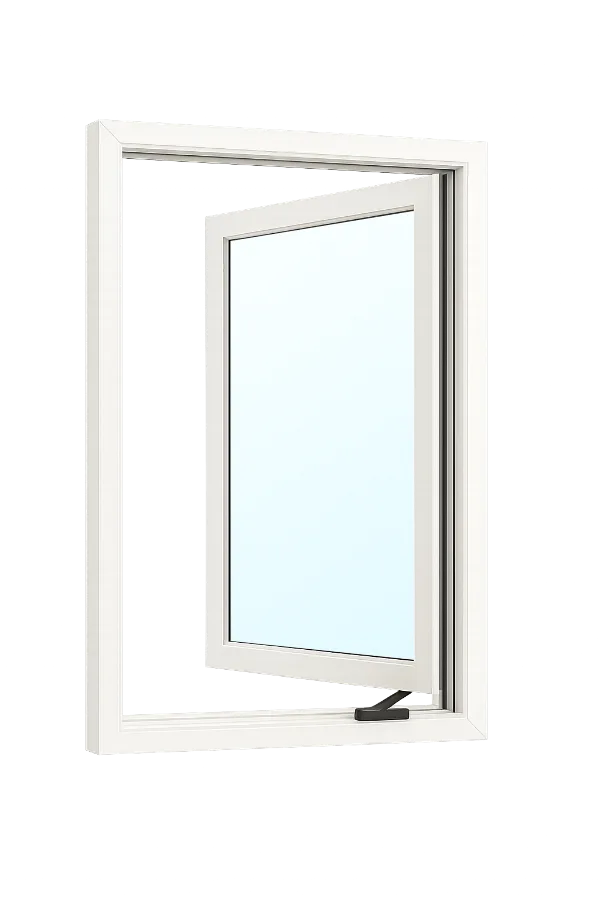
Casement windows crank open outward like a door, creating a tight seal when closed and excellent ventilation when open. They’re popular in kitchens, baths, and rooms where you want maximum airflow with easy one-hand operation.
Get a free quote from a vetted local window pro
One local expert, one call, one free in-home assessment — your info is never sold to a list of contractors.
- Free in-home assessment
- One vetted local pro
- No pressure, no spam
Best for
- ✓Kitchens and bathrooms
- ✓Hard-to-reach openings
- ✓Strong weather sealing
Why forever-home owners like them
- ✓Crank operation can be easier than lifting a heavy sash
- ✓Excellent seal when closed — fewer drafts
- ✓Large unobstructed glass for views and light
Things to consider
- •Need clearance outside to open fully
- •Screens are typically on the interior
Casement Windows in Lehigh Valley homes: what to know
Homeowners searching casement windows Allentown PA usually fall into two camps. The first is replacing the builder-grade casements that went into the subdivisions spreading across Upper Macungie, Forks, and Lower Nazareth from the 1990s on, where the crank has stripped or the sash corners have gone soft. The second is swapping a stubborn double-hung for something that seals tighter, usually over a kitchen sink or in a bonus room above the garage where nobody can reach the old window. Both camps want the same thing: a window that shuts like a refrigerator door.
That is what a casement does well. When you turn the crank closed, the lock pulls the sash against weatherstripping on all four sides, so wind has no sliding joint to work at. On the west edge of Lower Macungie, where fields run all the way to South Mountain and nothing slows a January gust, that compression is what keeps the curtains still. The same sash swung open in July becomes a scoop that grabs a breeze passing along the side of the house and turns it into the room. Two of them on opposite walls will move air through a whole floor without a fan.
Our region adds two wrinkles. Humid summers mean interior screens sit in the path of every open window, and pollen season coats them by mid-May, so a screen you can lift out and rinse matters more here than in a drier climate. And freeze-thaw is hard on any sash that is mostly glass: a poorly made corner lets meltwater into the joint, which is why the local pro we connect you with looks at the bottom rail of every existing casement before talking about new ones.
Where casement windows work best
Kitchens in 1990s and 2000s subdivisions
The window over the sink in an Upper Macungie or Forks colonial is almost always a casement, because nobody can lift a sash while leaning across a counter. A folding crank keeps the sill clear.
Bonus rooms and offices over the garage
These rooms run hot in summer and sit behind furniture. A pair of casements hinged on the outer edges catches air from two directions and cranks open from a chair.
Poconos lake cottages and A-frames
Lake-facing walls take wind straight across open water. Casements latched shut hold their seal in a gust, and on a calm evening they swing wide for the view with no meeting rail crossing it.
Primary bathrooms with a soaking tub
A tall casement beside a tub gives light and a real breath of air after a shower. Obscure glass below and clear above keeps the privacy without losing the sky.
Get a free quote from a vetted local window pro
One local expert, one call, one free in-home assessment — your info is never sold to a list of contractors.
- Free in-home assessment
- One vetted local pro
- No pressure, no spam
Glass, hardware, and operation
A casement is one big lite in a slim frame, so the glass package carries more of the performance than on a divided window. Double-pane Low-E with an inert gas fill is the starting point; on a lake wall or a wind-facing wall in the Slate Belt, ask to see a triple-pane option side by side. Glass beside a tub needs to be tempered, and near Route 22 or the interstate a laminated pane quiets road noise where you sleep.
Hardware is where casements differ most from each other. A single-point lock holds a small sash fine; anything tall wants a multi-point lock that pulls the sash tight at top, middle, and bottom with one handle. Cranks come fixed or folding, and a folding handle stays clear of blinds. Ask about wash-mode hinges that let the open sash slide toward the center of the frame so you can reach the outside glass from indoors.
How the installation goes
Replacing a casement with a casement is usually an insert into the existing frame, provided the frame is dry. Replacing a double-hung with a casement is more often a full-frame job, because the old frame was built for a sliding sash and may not give the hinge side a solid, square surface to bear on. Your matched installer will also step outside and look at what the sash will swing into: a deck rail, a hedge, a walkway where someone could catch a corner at head height.
On the day, each unit arrives assembled with the operator installed. The crew sets it, checks that the sash closes with an even gap all the way around, and adjusts the hinge arms so the lock engages without forcing. Expect them to cycle every window several times before leaving, because a casement that needs a shove on day one will need two hands by the third winter.
When something else fits better
Double-Hung Windows
On a street-facing facade in an older borough, or anywhere a swinging sash would hit a walkway, porch roof, or the neighbor a few feet away.
Awning Windows
Over a tub or in a basement where you want the window open during a summer shower.
Picture Windows
For a wide living-room wall, a fixed center unit with casements on each end gives the view and the airflow.
Before the visit: a casement checklist
- Walk outside and note what each opening swings into: deck, shrubs, walkway, fence.
- Decide which side each sash should hinge on; wind direction and furniture placement both matter.
- Try the crank on a sample and ask about a folding handle if a shade will hang in front.
- Ask whether a bedroom casement clears the egress opening size your township expects.
- Photograph the bottom corners of any existing casement so soft spots are on the table before the visit.
Casement questions
Are casements hard to operate with arthritis?
Many people find a smooth crank easier than lifting. Ask to try the hardware during your consultation.
Do casements work in cold climates?
Yes — their compression seal is one reason they’re popular in cold-weather regions like Northeast PA.
Which way should a casement hinge?
Think about the breeze first. A sash hinged so the open edge faces the direction air travels along the wall will pull that air into the room. Then think about the room: a hinge on the side away from the counter or the bed keeps the open sash out of the way. The local pro we connect you with can mark hinge sides on a plan before ordering.
Can I get a casement without a crank?
Yes. Push-out casements use a handle and friction hinges, so you unlatch and swing the sash by hand, and it stays where you leave it. They look cleaner and have nothing to strip, but you have to reach the sash to close it, which rules out the window over the sink.
How do I wash the outside of a casement from inside the house?
Lift out the interior screen, crank the sash fully open, and if the unit has wash-mode hinges, slide the sash toward the middle of the opening. That leaves a gap wide enough to reach around with a cloth. Without those hinges, a second-floor casement is a job for a pole.
Will a wide opening take one casement or two?
Casement sashes have a practical width limit because the whole weight hangs off one side. Past that limit, the casement windows Allentown PA installers order most are twins in a single frame, or a French casement with no center post so both sashes swing away from the middle. Your matched installer measures and tells you where it lands.
Why did my 1990s casements rot at the sash corners?
Some clad-wood casements from that era let water past the joint where the cladding meets the glass bead, and the wood underneath stayed wet through every thaw. If the frame is still dry, a sash-only replacement may be an option; if the frame has gone soft too, the unit comes out.
Other window styles
Compare frame materials
Getting casement installed near you
We match homeowners across the Lehigh Valley and Poconos with one vetted local installer.
Get a free quote from a vetted local window pro
One local expert, one call, one free in-home assessment — your info is never sold to a list of contractors.
- Free in-home assessment
- One vetted local pro
- No pressure, no spam